
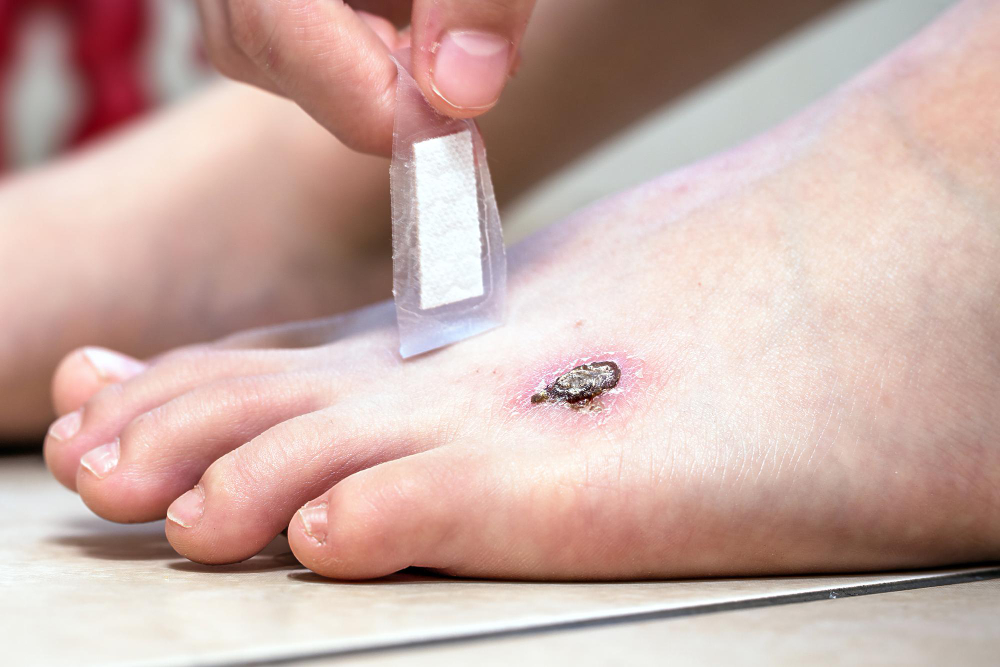
What is a Diabetic Wound?
A diabetic wound is a sore or ulcer that forms on the skin of people with diabetes. Often, these wounds appear on the feet or lower legs. Because diabetes can slow healing, even small cuts may turn into bigger problems. For example, a blister or scrape can become infected if not treated quickly. According to the CDC, people with diabetes are at higher risk for wounds that do not heal well. In many cases, these wounds need special care to prevent serious infection or other complications.
Common Symptoms of Diabetic Wounds
Early signs of a diabetic wound may be easy to miss. However, noticing them quickly can help prevent problems. Common symptoms include:
Sometimes, people with diabetes may not feel pain due to nerve damage. As a result, wounds can go unnoticed. Therefore, checking your feet and skin daily is important.
Causes and Risk Factors
Diabetic wounds often happen because high blood sugar can damage nerves and blood vessels. As a result, the skin may not heal as fast. Several risk factors can make diabetic wounds more likely:
For many people, a small injury like a blister can start a diabetic wound. In addition, infections can spread quickly if not treated.
How Diabetic Wounds are Diagnosed
Doctors use several steps to diagnose a diabetic wound. First, they will look at the wound and ask about your symptoms. Next, they may check for signs of infection, such as redness or swelling. Sometimes, doctors use a small tool to see how deep the wound goes. In some cases, they may order tests like:
Early diagnosis helps prevent serious problems. Therefore, it is important to see a doctor if you notice any new sores or changes in your skin.
Treatment Options for Diabetic Wounds
Treating a diabetic wound usually involves several steps. First, doctors will clean the wound to remove dead tissue. Next, they may use special dressings to keep the area moist and help healing. In many cases, antibiotics are needed if there is an infection. Sometimes, doctors recommend:
For severe wounds, surgery may be needed. However, most wounds heal with good care and early treatment. According to the American Diabetes Association, following a care plan can lower the risk of serious problems.
Tips for Daily Care and Prevention
Daily care is key to preventing diabetic wounds. For example, you can:
In addition, avoid walking barefoot, even at home. If you have trouble seeing or reaching your feet, ask someone to help you check them. With daily care, you can lower your risk of diabetic wounds and stay healthy.
If you are having diabetic ulcers consult at Sri Lakshmi Hospital.