
Introduction
Many people experience back pain at some point. However, knowing the difference between slip disc and muscle strain is important. Both conditions affect the back, but they need different care. For example, a slip disc may need more medical attention than a simple muscle strain. Understanding these differences helps you make better choices for your health.
What Is a Slip Disc?
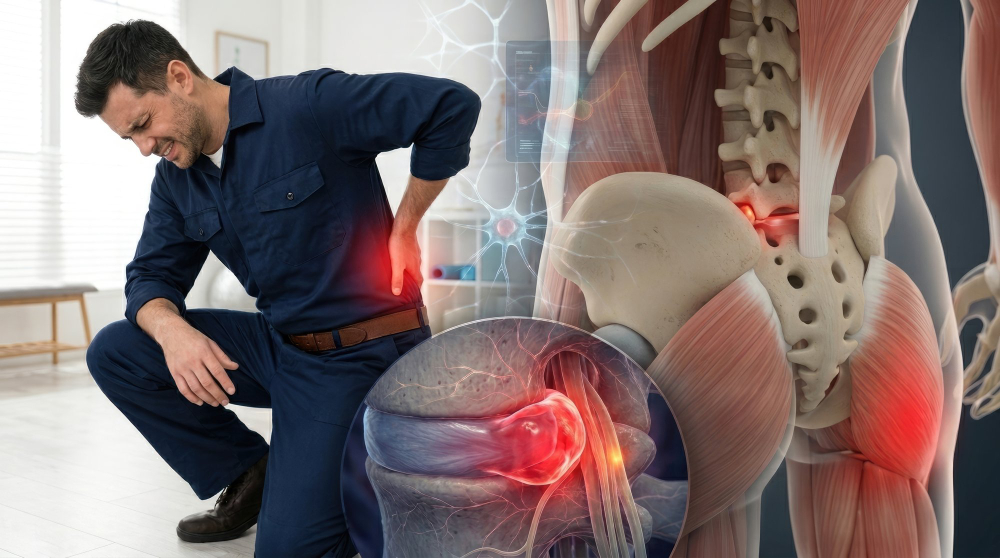
A slip disc, also called a herniated disc, happens when the soft part inside a spinal disc pushes out. This can press on nearby nerves. As a result, you may feel pain, tingling, or numbness. Sometimes, the pain travels down your leg or arm. Common symptoms include:
Slip discs often occur due to lifting heavy objects, sudden movements, or aging. In addition, people with jobs that require bending or twisting are at higher risk. According to the CDC, age, genetics, and being overweight can also increase your risk.
What Is a Muscle Strain?
On the other hand, a muscle strain means that a muscle or tendon in your back has been stretched or torn. This usually happens after lifting something heavy or moving suddenly. Muscle strains are very common and can affect anyone. Typical symptoms include:
Muscle strains often result from overuse, poor posture, or not warming up before exercise. Additionally, people who are not active or have weak back muscles are more likely to get a strain. The World Health Organization notes that back pain from muscle strain is a leading cause of missed work days.
Key Differences Between Slip Disc and Muscle Strain
It can be hard to tell the difference between slip disc and muscle strain. However, there are some key signs that can help:
Diagnosis
Doctors use several methods to find out if you have a slip disc or muscle strain. First, they will ask about your symptoms and medical history. Next, they will do a physical exam to check your strength, reflexes, and pain areas. Sometimes, imaging tests are needed. For example, an MRI or CT scan can show if a disc is herniated. X-rays may help rule out other causes of back pain. According to the CDC, early diagnosis can help prevent long-term problems.
Treatment Options
Treatment depends on the cause of your back pain. For a slip disc, doctors may suggest:
For muscle strain, treatment usually includes:
Additionally, lifestyle tips can help prevent both conditions:
When to See a Doctor
Sometimes, back pain can be a sign of a serious problem. You should see a doctor if you notice:
If you have any of these symptoms, seek medical help right away at Sri Lakshmi Hospital. Early care can help prevent lasting problems and improve your recovery.